
Is Yahoo Right to Ban Working From Home?
Published: Feb 26, 2013
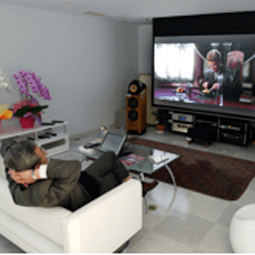
Is working from home a good idea? Opinions on the subject tend to be fairly starkly divided: people usually either love the idea, or profoundly mistrust it. And the reasons for belonging to either camp are fairly well mapped-out too. Those in the "for" group tend to believe that the freedom to work in comfortable surroundings makes them more productive, and gives them the ability to better balance their work and personal lives. And those who are opposed to it—especially managers—tend to fear that employees will use the opportunity to catch up on their DVR backlog on company time ("shirking" from home).
This week, the anti-work-from-home camp has something of a new figurehead, albeit one who probably would have preferred not to be in the headlines. Last Friday, an internal memo outlining Yahoo's new work from home policies hit the internet, outing CEO Marissa Mayer as an adversary to all who dream of meeting their monthly quotas while wearing pajamas.
In the memo, Yahoo HR chief Jackie Reses explains that the new policy—which will take effect in June—was driven by the desire to improve communication at the firm as it continues its attempt to reboot its business model and rescale the heights it once occupied in Silicon Valley.
The policy itself is very simple: Yahoo is ending the long-hold practice of being able to work from home on a regular or even full-time practice. Those who are unwilling or unable to start commuting in to a Yahoo office have essentially been invited to quit.
The fallout from the memo's publication has been swift, and somewhat brutal. On one side of the argument, Mayer has been pilloried for betraying working parents (an accusation that is lent extra piquancy by the revelation that she paid to install a nursery in her own office—an option that would be unavailable to most of her employees), as well as those who negotiated flexible working arrangements as part of their contracts.
On the other side, meanwhile, some Yahoo insiders have suggested that the firm had lost the ability to effectively manage its remote employees, which had caused productivity to drop—essentially the exact case that most opponents of flexible working arrangements fear. Yet another school of thought holds that Mayer took the option as a low-cost means of shedding some employees as she seeks to reduce headcount.
Whatever the truth of the motivation behind the move, it has certainly succeeded in opening up the debate on employee flexibility once more. While proponents of flexible arrangements are concerned about the bad rap that could follow such a well-known firm making such a public move to curtail working from home, there are a number of reasons why it's unlikely to spark a wave of companies recalling their remote access privileges.
First, Yahoo is in something of a unique position—a once-dominant firm with a huge headcount seeking to slim down and re-boot its entire culture following a series of missteps at CEO level.
Second—and more importantly—trends seem to be shifting in the opposite direction. According to a recent Stanford study, around 10 percent of American workers now do their jobs from home on a regular or full-time basis. Continued developments in technology (smartphones, communication and time-tracking software, cloud storage, etc.) should see that proportion continue to edge upwards in the coming years.
Finally, the same Stanford study found that, under the right circumstances, worker productivity actually rises when employees work from home. The study, which examined the effects of a new policy at a Chinese travel website, found that productivity was 13 percent higher among call center employees who were given the opportunity to do their jobs at home, compared to a control group of employees doing the same job in the company's office. Among the reasons for the gains: home-based employees took fewer breaks and sick days, and handled more calls per minute—a change attributed to having a quieter working environment.
Clearly, there is no one-size-fits-all approach to the question of flexible working arrangements. But questions over Yahoo's new approach remain: has the firm gone too far? Has it acted in good faith? Is the move simply a ruse to reduce headcount cheaply, or is Mayer correct to insist that office attendance is key to creating a new culture?
Let us know your thoughts in the comments below.
Read More
All Things D: "Physically Together": Here’s the Internal Yahoo No-Work-From-Home Memo for Remote Workers and Maybe More
Business Insider: Why Marissa Mayer Told Remote Employees to Work in an Office … Or Quit
Stanford: Does Working From Home Work? Evidence From A Chinese Experiment (pdf)